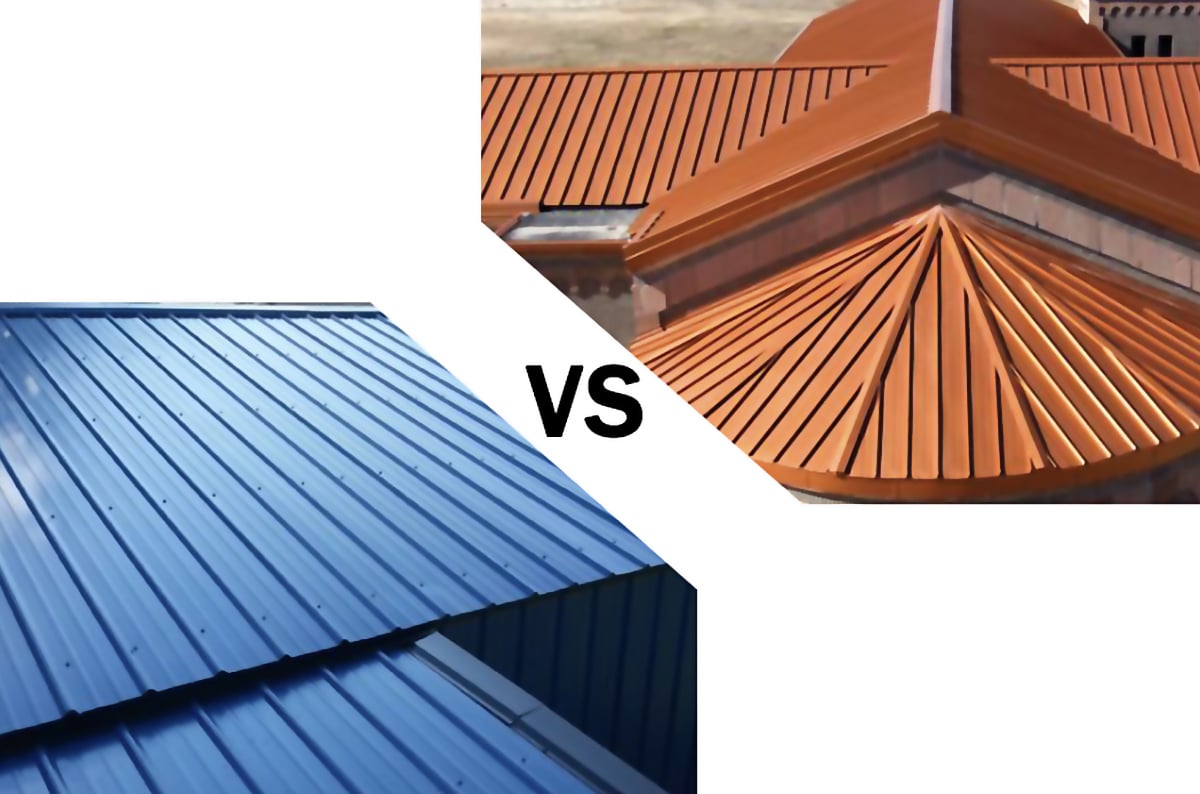
Introduction — Why Your Metal Roof Choice Matters More Than You Think Metal roofing has become one of the fastest-growing roofing categories in residential and commercial construction — and for good reason. Metal roofs outlast asphalt shingles by decades, withstand brutal winters, ice dams, coastal winds, and heavy snow loads better than virtually any other roofing system, and deliver long-term value that few materials can match. But “metal roofing” is not a single product. It is a broad category that encompasses dozens of systems, profiles, and materials — and two of the most commonly chosen and most frequently compared options are screw down metal roofing (also called exposed fastener metal roofing) and standing seam metal roofing (concealed fastener metal roofing). These two systems look similar from a distance. They are both metal. They are both durable. They are both dramatically superior to asphalt shingles in longevity and weather resistance. But they are fundamentally different systems — with different installation methods, different failure modes, different maintenance requirements, different lifespans, and very different price points. Choosing the wrong system for your property, your budget, and your long-term goals is a costly mistake that is difficult and expensive to undo. Choosing the right one is an investment that pays dividends for 30 to 50+ years. At Roof Restore Contractor 5x, we install both systems on residential, commercial, and industrial properties — and we help our clients make this decision based on honest, expert guidance rather than whichever product has a higher profit margin. This guide gives you everything you need to make the right call. What Is Screw Down Metal Roofing? Screw down metal roofing — also referred to as exposed fastener metal roofing or through-fastened metal roofing — is the older, more traditional of the two systems. It is the type of metal roofing most commonly seen on agricultural buildings, barns, storage facilities, rural homes, and budget-conscious commercial applications. The defining characteristic of screw down metal roofing is exactly what the name describes: metal panels are attached to the roof deck by driving screws directly through the face of the panel and into the structural decking below. Those screws — and the rubber washers beneath their heads that create the weathertight seal — are exposed on the roof surface, visible from the ground, and directly exposed to weather year-round. How Screw Down Metal Roofing Is Constructed Screw down metal panels are typically manufactured from: Panel thickness — measured in gauge — typically ranges from 29 gauge (thinner, more economical) to 24 gauge (thicker, more durable and impact-resistant). For residential and commercial applications, 26 gauge is the most common balance of cost and performance. For high-wind or high-impact environments, 24 gauge is the recommended minimum. Panels are available in a wide range of profiles — including corrugated, ribbed, R-panel, and U-panel — each with slightly different structural characteristics and aesthetic appearances. The Screw Down Installation Process — Step by Step Understanding how screw down metal roofing is installed helps explain both its advantages and its limitations: 1. Deck PreparationThe roof deck is inspected, repaired if necessary, and prepared with appropriate underlayment. For metal roofing, a high-temperature synthetic underlayment or self-adhering membrane is recommended over standard felt paper. 2. Panel Layout and CuttingPanels are measured, cut to length, and laid out from one edge of the roof to the other, with each panel overlapping the previous one by at least one full rib or corrugation to create a weather-shedding overlap joint. 3. FasteningScrews with neoprene rubber washers are driven through the face of the panel — through both the overlapping and underlying panel layers — and into the roof deck below. Fasteners are typically placed every 12–24 inches along each panel rib, creating a grid of exposed fasteners across the entire roof surface. 4. Flashing and TrimRidge caps, eave trim, rake trim, and all penetration flashings are installed and sealed to complete the weathertight envelope. 5. Sealant ApplicationButyl tape or sealant is applied at all panel overlaps and penetration points to supplement the mechanical fastener seal. The entire process is relatively straightforward compared to standing seam installation — which is a primary reason screw down metal roofing costs significantly less in labor. Key Advantages of Screw Down Metal Roofing ✔ Lower Upfront CostScrew down metal roofing is significantly more affordable than standing seam — both in materials and installation labor. For budget-conscious homeowners and commercial property owners who need reliable metal roofing performance without the premium price tag, screw down systems offer compelling value. Typical installed cost ranges: On a 2,000 square foot roof, that difference can represent $12,000 – $24,000 in upfront cost savings. ✔ Faster InstallationThe straightforward fastening process means screw down metal roofs can be installed faster than standing seam systems — reducing labor time and minimizing disruption to your home or business operations during the project. ✔ Easier Field RepairsBecause panels are individually fastened rather than interlocked, individual panels can be removed and replaced independently if damage occurs — without disturbing surrounding panels. This makes storm damage repairs faster and more economical. ✔ Widely Available MaterialsScrew down metal panels are manufactured by dozens of suppliers and are readily available from local roofing distributors — reducing lead times and supply chain delays compared to some specialized standing seam products. ✔ Suitable for Low-Slope ApplicationsCertain screw down panel profiles — particularly R-panel and U-panel — can be installed on roof slopes as low as 1:12 with proper sealant application, making them viable for low-slope agricultural and commercial applications. ✔ Proven Long-Term PerformanceWhen properly installed and maintained, screw down metal roofing systems reliably deliver 25–40 years of service life — far exceeding asphalt shingle lifespans of 15–25 years. The Critical Limitation of Screw Down Metal Roofing — Thermal Movement This is the single most important technical consideration in the screw down vs. standing seam decision — and the one that most homeowners and many contractors either don’t fully understand or fail to explain clearly. Metal expands and contracts with temperature changes. This